The school has six teachers and about 150 learners, and it sits among the farms west of Alexandria in the Eastern Cape. Next year, one of its Grade 9 learners will leave home to study aerospace science, with a scholarship worth R1.4 million covering the cost.
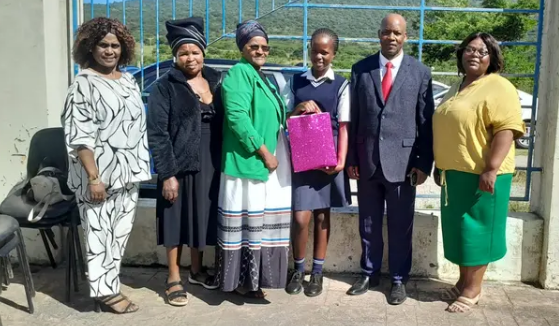
The 13-year-old is one of 25 learners from districts across the province selected for the Eastern Cape Aviation School. Teachers, family members and education officials from the Sarah Baartman District gathered at the school on Thursday, 19 November, to celebrate her selection.
How she earned her place
The Eastern Cape Department of Education ran a competitive selection test for Grade 9 learners moving into Grade 10. The test covered mathematics, science and English, and the learner excelled in maths and science.
From Grade 10 to matric she will attend Port Alfred High School. Every Friday she will also have classes at 43 Air School in Port Alfred, focusing on STEM subjects and aerospace science, including aero-maritime studies. Her scholarship covers her schooling costs, including accommodation, until she finishes school.
Her school is a Quintile 3 school, which means families pay no school fees. The principal thanked everyone who had helped her along the way, congratulated her mother, and said the school was proud to have her represent it.
A programme built for learners like her
The Eastern Cape Aviation School is a partnership between the provincial education department, 43 Air School and Port Alfred High School. Premier Oscar Mabuyane launched it at 43 Air School in January 2025 as a R70 million bursary initiative.
At that launch, then-Education MEC Fundile Gade explained the cost of each place. "We are paying R1.4m per kid (bursary) as government so that we can have authority over the process," he said.
The department said the programme was meant to widen the school curriculum, close the gap between what schools teach and the skills employers need, and reduce the number of young people who are not working or studying. It said it was specifically targeting learners from previously disadvantaged backgrounds.
Why it matters
Most learners at rural no-fee schools never get anywhere near an airfield, let alone classes in aerospace science. A place in this programme does not guarantee a career in aviation, but it gives 25 young people from across the province access to specialised teaching that is normally out of reach for families without money.
It also shows that small rural schools can produce learners who compete with the best in the province.
What we do not yet know
- Which schools and districts the other 24 learners selected this year come from.
- How many learners sat the selection test.
- When applications for the next intake will open.
The Insight Factor is not naming the learner or her school because she is a minor.