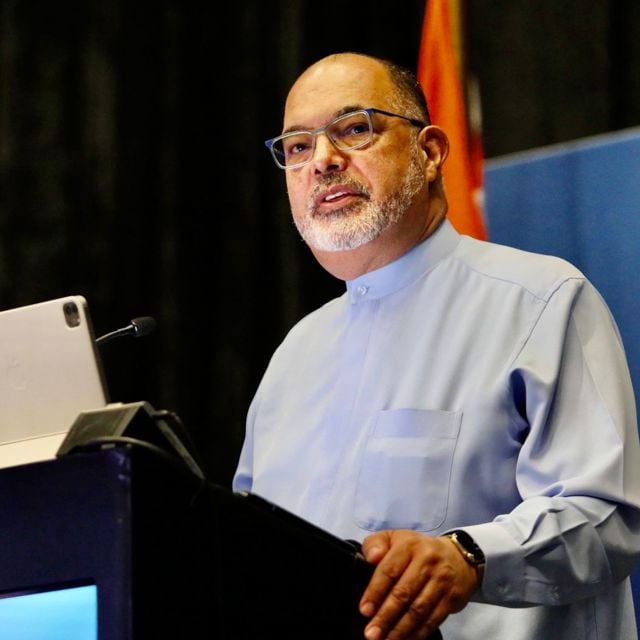
Former SARS commissioner Edward Kieswetter told the Madlanga Commission on Wednesday, 25 November, that organised crime networks in South Africa have become better organised than the state agencies meant to fight them.
Kieswetter, who led the South African Revenue Service from May 2019 until April 2026, said the country has several crime-fighting institutions but no framework tying them to shared goals. "We don't need more institutions, but we do not have an institutional ecosystem," he said.
The commission adjourned for the day during his evidence. He is due to continue on Thursday morning.
Case files with no feedback
Kieswetter said SARS can run investigations within its own mandate but often loses sight of cases once they are handed to the police, the Hawks or the National Prosecuting Authority.
He said SARS handed more than 80 case files linked to a tobacco and cigarette syndicate to the NPA more than three years ago and has received no meaningful progress updates since. "Once SARS hands it over, it has no further visibility thereof," he said, adding that the NPA "is not obliged in law to come back to SARS and give any progress update."
According to his evidence, SARS ran 42 projects and 534 investigations in the 2025/26 financial year.
'Hiring the same kind of people'
Kieswetter said criminal networks and the state compete for the same skills. "Both sides hire the same kind of people and use the same tools," he said, arguing that the state's response "is inadequate to deal with the growing phenomenon."
He said performance targets reward agencies for meeting their own goals rather than for dismantling networks, which can push them towards simpler cases. "Disrupting a consignment is not the same as disrupting a criminal network," he said.
He described the existing Criminal Justice System Fusion Centre, which brings together the police, the Hawks, SARS, the Financial Intelligence Centre and prosecutors, as a place to share information that "was never institutionalised to result in collaboration."
What he proposed
- A national office to coordinate priority organised-crime cases without changing existing agencies' mandates or independence.
- A national framework to measure the illicit economy, led by Statistics South Africa and National Treasury with SARS, the Reserve Bank and the Financial Intelligence Centre.
- A shared case-tracking system and changes to laws that restrict information-sharing between agencies.
The commission is investigating allegations of criminality, political interference and corruption in the criminal justice system.