The Electoral Commission of South Africa (IEC) says it was not able to finalise all of the objections lodged after the 4 November local government elections, while the ANC Youth League says it will take its complaints about the voters' roll and the count to the Electoral Court.
What the IEC told parties
At a briefing on Friday 13 November, the IEC said it received 1,708 objections from party officials, about double the number in 2021. Of these, 433 met the requirements of section 65 of the Municipal Electoral Act, up from 218 in 2021.
The IEC said 252 applications were finalised: three were upheld and 249 were rejected, including 12 applications for recounts. On those figures, about 181 qualifying applications remain open, by our calculation. The IEC has not said where they are.
IEC chair Mosotho Moepya said: "it has not been possible for the commission to finalise these applications." Objections centred on counting irregularities, errors in capturing results, the incorrect inclusion of special votes and alleged high numbers of spoilt ballots. Moepya said some submissions did not meet section 65 but were still considered, and that the remaining matters would be analysed and fed into a debrief for future elections.
Why the clock matters
Moepya said municipal managers must convene the first meetings of their councils within 14 days. Many councils are hung, so the first sittings are where coalition deals become visible. Five by-elections are needed, three because sitting councillors died, and four wards were decided by a random draw after candidates tied on votes.
The ANC Youth League's complaints
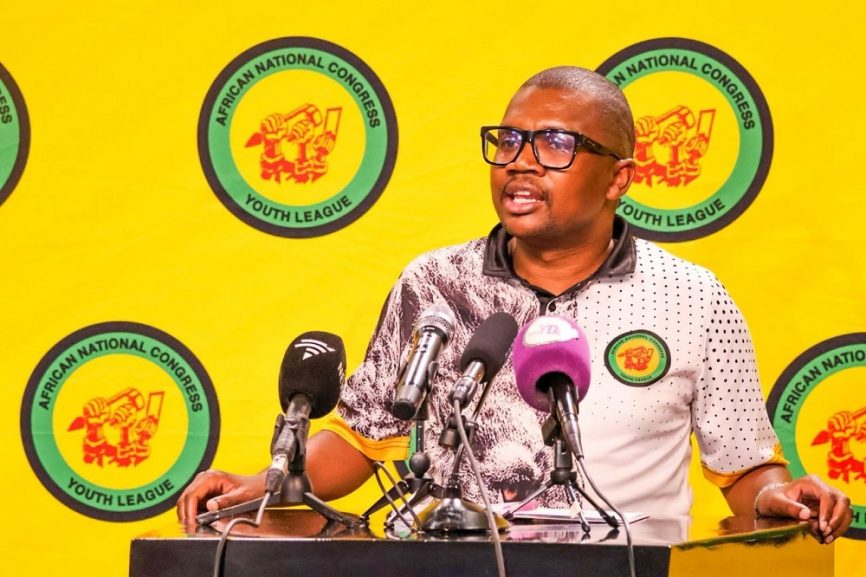
ANC Youth League president Collen Malatji said on Wednesday that the league would approach the Electoral Court over several concerns. He said that "in Tembisa there is a house where [an] ActionSA councillor candidate has registered 126 voters in one household" and added: "There is no house with 126 people living in one house; this is a sign of corruption."
These are Malatji's allegations. The reports do not carry a response from ActionSA or the IEC, and no finding has been made.
Malatji also said wards that the ANC was first told it had lost returned to the party after recounts, "raising serious concerns about the accuracy of the initial counting and capturing processes." He criticised the proportional representation system as one that "punishes the winning rather than rewarding electoral mandate received from the people". The ANC won no proportional representation seats in the City of Johannesburg.
Other addresses he cited include a Sebokeng house where more than 1,000 voters were reportedly registered, a hospital in Lenasia and a supermarket in the Sebokeng area. ANC Sedibeng has also said it is considering the Electoral Court.
Sasa Manganye, the ANC Johannesburg regional secretary, said in a statement that the party "identified several discrepancies and matters of concern in various areas across the region" and had submitted formal objections through the applicable electoral process.
What we do not yet know
- Which wards and municipalities the unresolved objections concern, and whether any could change a council's makeup.
- Whether the ANC Youth League or ANC Sedibeng has filed papers, and what relief they would ask for.
- The IEC's response to the address claims in Tembisa, Sebokeng and Lenasia.
- The exact calendar dates of each council's first meeting.