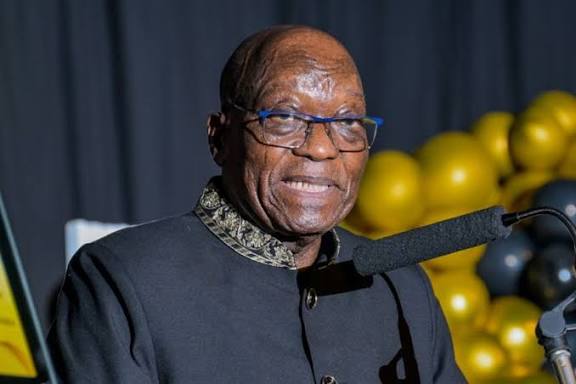
The Constitutional Court has refused former president Jacob Zuma leave to appeal an order that he personally repay about R28.9 million in state-paid legal fees, with costs.
The court issued its order on 12 November in Zuma v Presidency of the Republic of South Africa and Others. The amount at stake is R28,960,774, plus interest. Reports of the order do not set out the court's reasons.
What the order means
The refusal leaves in place the Pretoria High Court's October 2025 order, in which Judge Anthony Millar directed Zuma to repay the money to the State Attorney within 60 days, with costs. The High Court dismissed his application for leave to appeal in December 2025.
If Zuma does not pay, the State Attorney may take steps to enforce the order, including attaching and selling his movable and immovable property. The State Attorney may also seek to attach his presidential pension, or part of it, subject to the necessary legal process. The State Attorney must report to the court every three months on recovery efforts.
How the case got here
The state paid Zuma's legal costs in his criminal cases under an arrangement concluded in 2006, during Thabo Mbeki's presidency. In December 2018 the Pretoria High Court declared the arrangement unlawful and ordered the money recovered, and the Supreme Court of Appeal upheld that ruling in 2021.
In October 2025 Judge Millar rejected Zuma's argument that state officials, not he, made the funding decision. The Democratic Alliance opposed Zuma's latest challenge.
The Zuma Foundation's response
The JG Zuma Foundation said it respects the court and accepts that its orders are binding, but that "Respect does not require silence." It disputes the finding that its argument did not engage the court's jurisdiction.
The foundation argues the appeal raised a question under section 172(1)(b) of the Constitution: whether it is just and equitable to order a person to repay the full amount personally when the state made the unlawful decision. It says Zuma did not interpret the State Attorney Act, authorise the spending or approve the payments, and that he accepted an undertaking made by the state.
Subject to legal advice, the foundation said it plans to:
- serve notice of an indemnification claim on the Presidency, the Minister of Justice and Constitutional Development and the State Attorney, covering any amount Zuma is forced to pay;
- ask the Presidency for a written undertaking not to pursue execution, including attaching his pension, until that claim is decided; and
- ask the Director-General in the Presidency and National Treasury to identify the officials who authorised the spending and whether they bear personal liability.
The foundation said "the State must answer for the consequences of its own error."
What we do not yet know
- The court's reasons for refusing leave, if it gave any.
- Whether the Presidency or the State Attorney will respond to the foundation's requests. Neither had commented in the reports we have seen.
- When the 60-day period to pay starts to run, and whether the State Attorney will move against Zuma's assets or pension.