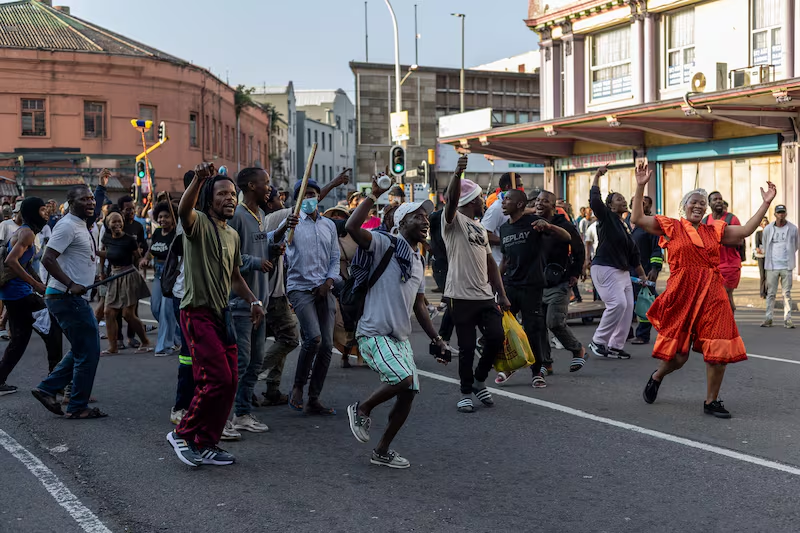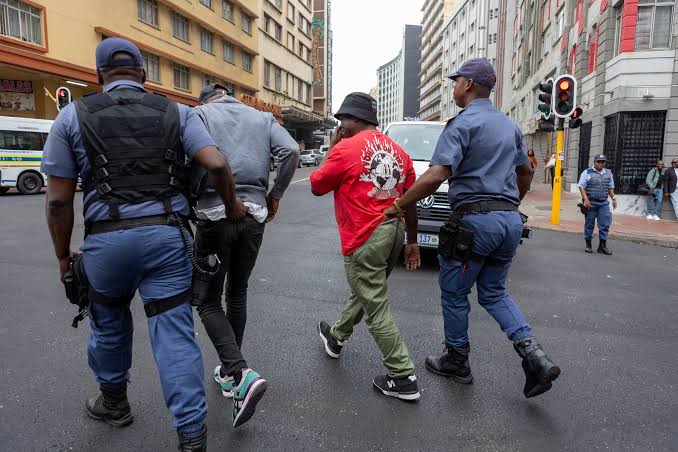
Police have arrested 30 people over the violent protests in Durban and Soweto that followed the Constitutional Court's asylum ruling, and the army has been activated in KwaZulu-Natal to support them.
The suspects, 25 in KwaZulu-Natal and five in Gauteng, have been arrested since Thursday 8 October, police told a briefing on Saturday night. All are presumed innocent until proven guilty in court.
Developing story. Figures are police figures as reported.
Arrests and charges
The charges include public violence, malicious damage to property, illegal gathering, and obstruction and resisting arrest. Further charges will depend on the investigations, and the National Prosecuting Authority will handle the cases. The suspects have not been named.
Those arrested include alleged ringleaders who had threatened to disrupt planned sporting events in Durban, according to police. Deputy National Commissioner for Policing Lieutenant General Tebello Mosikili told the National Joint Operational and Intelligence Structure (NATJOINTS) briefing that the planned football and cricket matches in KwaZulu-Natal went ahead without disruption.
On Friday, police were investigating nine cases of malicious damage to property, three of common assault and one of public violence.
Deployment and police statements
Police say maximum deployments began in all nine provinces on Friday 9 October, and the South African National Defence Force (SANDF) was activated in KwaZulu-Natal to support the police. KwaZulu-Natal Premier Thami Ntuli said on Friday that he had asked for soldiers, calling the situation in Durban "unmanageable". One report also says soldiers helped police in Orlando West, Soweto, where crowds targeted foreign-run shops. We have not seen figures for how many soldiers have been deployed.
Mosikili said: "The destruction of property and intimidation of individuals are not legitimate expressions of grievance."
Acting National Commissioner Puleng Dimpane warned that all violators will face prosecution regardless of citizenship, according to a report, and directed crime intelligence to track perpetrators and identify potential flashpoints.
A Johannesburg Metropolitan Police Department representative, Xolani Fihla, said investigators are examining reports of live rounds fired toward crowds in Soweto.
Background and what we do not know
The protests followed claims that the Constitutional Court's July asylum ruling grants blanket amnesty to undocumented foreign nationals. Home Affairs has called such claims "categorically false", and the ruling does not grant refugee status, citizenship or permanent residence.
On 8 October, police reported 14 vehicles torched in Durban's city centre and about 10 in Soweto, with shops looted and buildings damaged. Police fired rubber bullets and tear gas. In Durban, anti-illegal-immigration groups gathered outside the Che Guevara Road refugee office and blocked applicants. A protester was allegedly assaulted and suffered a broken leg, and three foreign nationals were arrested over that incident. Those are allegations.
On 9 October, Home Affairs withdrew the directive that told refugee offices to accept all applicants, citing risks to staff and public order.
What we do not know:
- how many soldiers are deployed and for how long;
- whether more arrests are expected, and who the alleged ringleaders are;
- the outcome of the live-rounds inquiry;
- whether further protests are planned.