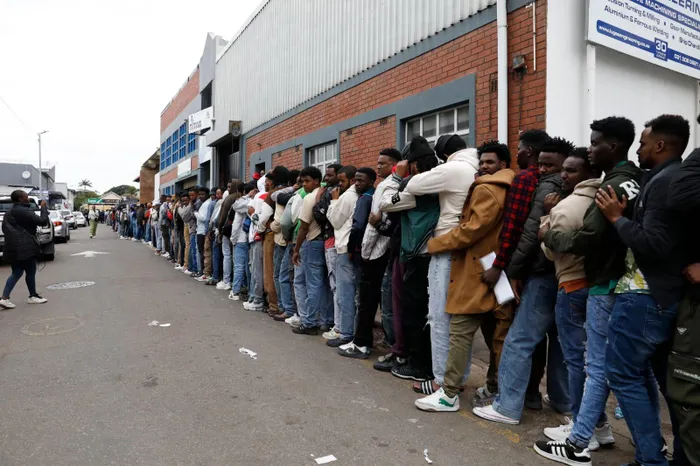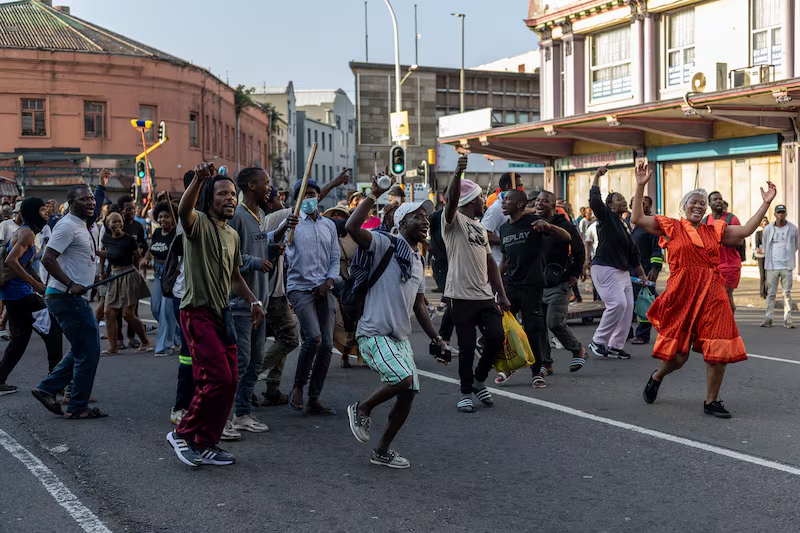
The Department of Home Affairs has withdrawn the directive that told refugee reception offices to accept asylum applications from anyone who asked, after violent protests in Durban and Soweto and warnings that its offices were overwhelmed.
The department confirmed the withdrawal on Friday 9 October. It stressed that the withdrawal does not overturn or suspend the Constitutional Court's July judgment, which remains binding.
Breaking and developing. The department has not yet said how asylum applications will be handled in the meantime.
What Home Affairs announced
The department said its Director-General withdrew the directive, which had been issued on 28 September to all refugee reception offices to implement the Constitutional Court's 7 July judgment in the Scalabrini Centre of Cape Town case.
It gave three reasons: the offices were overwhelmed within days, its officials faced safety threats, and there were concerns about public safety and order. The department said applying the judgment immediately had "serious consequences that could not have been foreseen in the Court order", as reported.
The withdrawal followed violent anti-immigration protests in Durban and Soweto, where vehicles were torched and businesses vandalised. On Thursday the Inter-Ministerial Committee on Migration had acknowledged that the reception offices were overwhelmed.
The department rejected claims that the directive was politically motivated. It said the Director-General issued it as an administrative, operational step without the knowledge or involvement of the Minister or other political office-bearers, and called claims of political motivation "categorically untrue". It also noted that it had opposed the case that produced the ruling.
The ruling still binds
The withdrawal does not overturn or suspend the Constitutional Court's judgment, which struck down parts of the Refugees Act that could block people from the asylum process on procedural grounds before their claims were assessed. The ruling does not grant refugee status or permanent residence. Each claim must still be assessed under the law.
The department said it respects the judiciary and the rule of law and is committed to an operationally sustainable way of implementing the judgment without disrupting the offices' functioning. It will start "a fresh process" to find that approach, but has announced no details or timeline.
Gauteng Premier Panyaza Lesufi welcomed the move, calling it "a major relief" that gives government time to consult further. He said it allows the situation to be rectified "without undermining the Constitutional Court judgment".
Police are investigating nine cases of malicious damage to property, three of common assault and one of public violence linked to the unrest, and are monitoring for further protests. Acting Police Commissioner Puleng Dimpane was in Soweto on Friday with senior officials to survey the damage from overnight unrest.
What we do not yet know
- What happens to applicants now. The coverage we reviewed does not say how asylum applications will be handled while the new approach is developed, or whether people already queuing at the offices will be served.
- What the new approach looks like. The department has given no details, no timeline and no sign of whether it will go back to the court.
- Whether the ruling's critics and supporters accept it. Beyond the Gauteng premier's welcome, we did not find reaction from the Scalabrini Centre, Lawyers for Human Rights or opposition parties at the time of writing.
The directive was issued on 28 September, according to the department, about ten days before the protests this week.