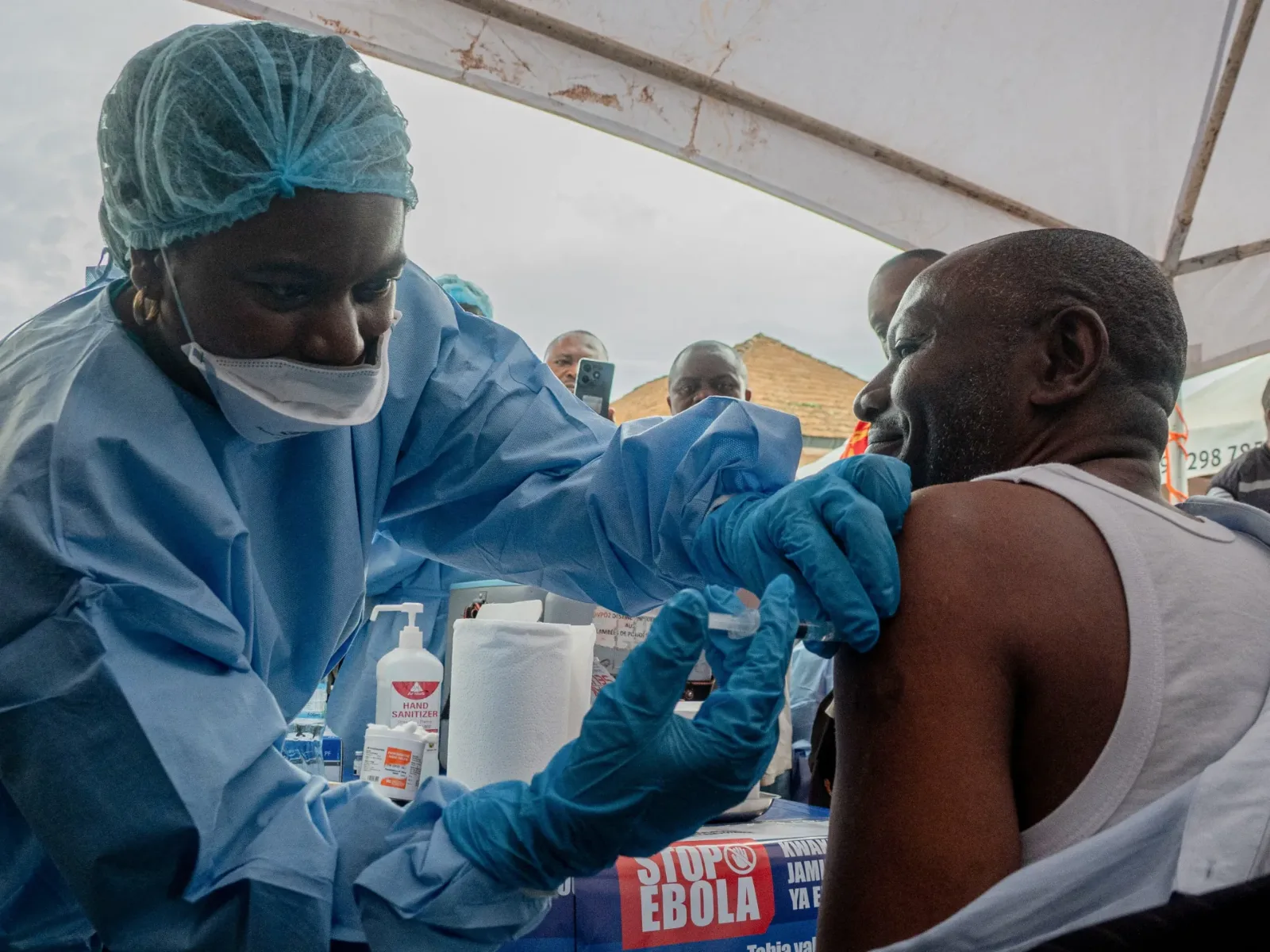
The World Health Organization (WHO) says two more vaccine candidates will join the clinical trial under way in the Democratic Republic of Congo, where the Bundibugyo strain of Ebola has now infected more than 10,000 people.
WHO Director-General Tedros Adhanom Ghebreyesus told a news conference in Geneva on Wednesday that WHO expert groups had recommended two candidates designed specifically for the Bundibugyo virus.
The two candidates
According to Tedros, the candidates are ChAdOx1 BDBV, developed by Oxford University with the Serum Institute of India, and an mRNA vaccine from Moderna known as mRNA-1469. The trial began last month with Ervebo, a vaccine approved against the Zaire strain of Ebola but not against Bundibugyo.
There are no approved treatments or vaccines for Bundibugyo.
The outbreak in numbers
Tedros said more than 10,000 cases and 5,000 deaths had been reported in Congo, with new hotspots emerging. Africa CDC data as of 2 November put the total at 10,444 infections across DR Congo, Uganda and Kenya and 5,376 deaths, with a fatality rate above 50%.
Tedros said Kenya had reported nine cases, including two deaths, and that WHO had recorded one confirmed case in Nigeria.
Travel restrictions
Tedros called for travel curbs to be lifted: "We call on countries that have imposed travel restrictions to lift them." He added that such restrictions "punish countries for doing the right thing, create disincentives for transparency, and harm the response."
The United States recently began requiring air travellers to attest that they have not been in DR Congo in the previous 21 days.
What we do not yet know
- When the two new vaccine arms will start, where they will be tested and how many people will be enrolled. These details were not given.
- How the Nigeria figures fit together. Earlier reports described an imported case in October, while two further suspected cases tested negative.
This story relies largely on a single account of the WHO briefing and will be updated when WHO publishes its full remarks.