South Africans vote in local government elections on Wednesday 4 November, and the polling points to coalition governments in most of the big metros rather than clear winners.
The Electoral Commission of South Africa (IEC) says it approved a record 2,655,067 special vote applications, with special voting on 2 and 3 November. According to Ipsos, 29.2 million of the 44.9 million eligible South Africans are registered to vote, and about 12.8 million would vote if turnout matched 2021, or about 16.3 million if it matched the 2024 national election.
How and when you can vote
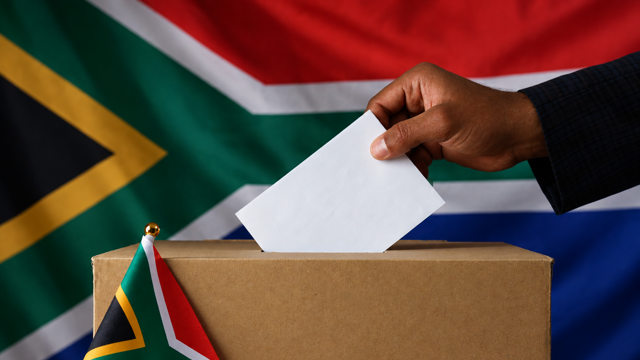
Special voting is open only to approved applicants, on 2 and 3 November from 8am to 5pm. On Election Day, 4 November, voting stations are open from 7am to 9pm, according to the IEC.
The IEC says it accepts a smart ID card, a green barcoded ID book or a valid temporary identity certificate. It says driver's licences, passports, student cards and photocopies are not accepted.
Voters in metropolitan municipalities get two ballots, a ward ballot and a proportional representation (PR) ballot. Voters in local municipalities get three: ward, PR and district PR.
You can check your registration at www.elections.org.za, by SMS of your 13-digit ID number to 32810, or by sending "Hi" to the IEC's WhatsApp number, 060 088 0000.
What the polls say
An Ipsos survey released on 30 October, with fieldwork from 12 September to 13 October, found that no party commands strong majority support. Ipsos says the ANC's national support is at an all-time low; Insight Factor's earlier report on the poll put it at 30%. Ipsos political analyst Mari Harris said: "we will probably have new coalition governments in most of the metropolitan municipalities after the elections."
Ipsos says the DA is slightly ahead of the ANC in Johannesburg, three percentage points ahead in Tshwane, and has just over half of voter support in Cape Town. In eThekwini, the MK Party remains comfortably ahead despite an 8-point shift in its support. Ipsos says the race in Nelson Mandela Bay is extremely close, and that the ANC is ahead in Ekurhuleni and Mangaung.
Ipsos surveyed 3,600 people, of whom 2,533 were registered voters, with a maximum margin of error of 1.95% for that group. The margin is larger for individual metros, up to about 7.8 points. Ipsos says its figures "should not be interpreted as a prediction of the final outcomes".
Security and readiness
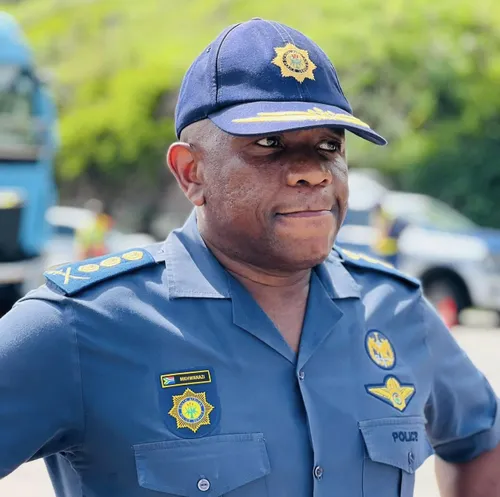
The South African Police Service (SAPS) has reportedly identified 331 high-risk voting stations, more than half reportedly in KwaZulu-Natal, and says it is operationally ready. President Cyril Ramaphosa has approved the deployment of 510 soldiers in KwaZulu-Natal until 30 November.
Research by the Global Initiative Against Transnational Organized Crime counted at least 43 people killed in 45 politically linked attacks between 1 January and 30 September 2026, nearly double the 23 recorded in the same period of 2025. Ramaphosa condemned the killings, saying: "Catch them, have them prosecuted."
Co-operative Governance Minister Velenkosini Hlabisa, who chairs the Inter-Ministerial Committee on the elections, said "all systems go" for the vote. After a Constitutional Court ruling returned 181 ANC candidates to the ballot, the IEC extended the same relief to 32 other parties, requiring 6.6 million extra ballot papers across 107 municipalities. Hlabisa said municipalities must make sure voting stations have water.