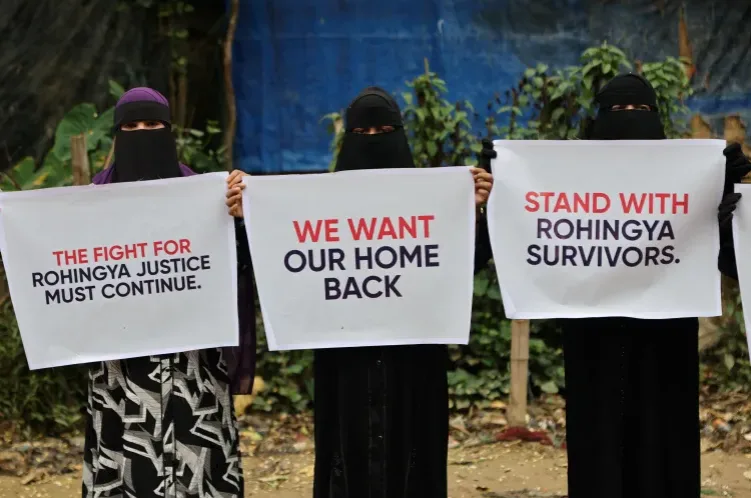
The International Court of Justice (ICJ) ruled on Thursday 19 November 2026 that Myanmar committed genocide against the Rohingya minority, the first time the court has found a state responsible for the crime. The decision was 9 to 6, according to Human Rights Watch, and the court's findings are final.
The case was brought in 2019 by The Gambia under the 1948 Genocide Convention. The Gambia has no direct link to the events, a position that mirrors South Africa's as the applicant in its own genocide case against Israel.
What the court found
According to Human Rights Watch, the court found that Myanmar's security forces and other state organs committed genocide during the 2016-2017 "clearance operations". It identified three kinds of acts: killing, causing serious bodily or mental harm, and imposing measures intended to prevent births.
Human Rights Watch reports that the court called genocidal intent "the only reasonable inference" from the evidence, and that it rejected Myanmar's argument that the campaign was a legitimate operation against insurgents. The court also found that Myanmar breached its duties to prevent and punish genocide.
What Myanmar has been ordered to do
- Stop ongoing violations, including the failure to investigate, prosecute and punish those responsible.
- Give assurances that the acts will not be repeated.
- Provide reparations to Rohingya victims, including facilitating safe, voluntary and dignified return and reuniting displaced families, with compensation where restitution is not possible.
The Gambia's Justice Minister, Dawda Jallow, said: "This is the first time the court has found a state responsible for committing genocide, the crime of crimes." He said The Gambia would work with partners and rely first on Myanmar's voluntary compliance, while noting that the United Nations system could be used to enforce the decision.
Maria Elena Vignoli, senior international justice counsel at Human Rights Watch, said: "Myanmar should swiftly comply with the World court's judgment and end its oppression of the Rohingya."
Why South Africa is watching
Because the ICJ builds on its own earlier reasoning, its findings on how genocidal intent is established could carry weight in South Africa's case against Israel, according to analysis published after the ruling. In the Myanmar case, Ireland was among 11 states that intervened, arguing that counter-terrorism operations or armed conflict cannot by themselves rule out genocide, a point it noted was relevant to the Israel case.
The ruling also lands as the Southern Africa Litigation Centre has asked the National Prosecuting Authority and the Hawks to investigate South African arms exports to Myanmar. The Insight Factor reported on that request on 20 November.
What we do not yet know
- Whether the South African government has formally responded to the ruling. We have not confirmed a statement from the Department of International Relations and Cooperation.
- How Myanmar will respond. A report on the ruling indicated that it rejected the decision, but we have not confirmed its wording.
- How, and by whom, the order would be enforced if Myanmar does not comply.