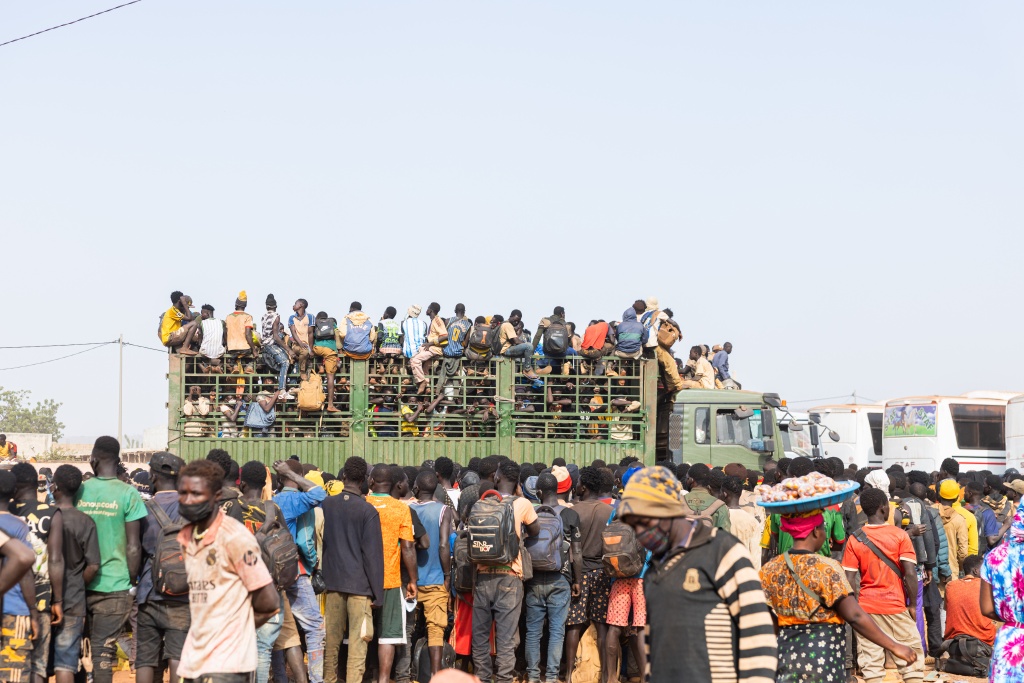
Tens of thousands of gold miners and their families have fled into Mali after Guinea deployed security forces in its northeast to stamp out illegal artisanal gold mining, creating a humanitarian emergency along the border.
Guinea began the operation early in November. It says the aim is to curb environmental harm such as land degradation and water pollution. Miners and their families were ordered out and crossed into Mali.
The numbers
- Malian authorities say about 100,000 people have arrived in Bamako, and another 60,000 have gathered in the border town of Kouremale.
- Thousands walked 125 km from Kouremale to Ouezzindougou, one of two official reception sites.
- Burkina Faso says 45,406 people have reached it through its repatriation operations from Mali, including 9,852 children and 1,224 nationals of other countries.
- Guinea has arrested more than 1,200 suspected illegal miners in the northeast, and the first mass trials opened in Conakry this week.
Deaths and hardship
Malian government figures show eleven deaths among those who fled. Guinea's capital, Conakry, says at least 10 people were killed in the Siguiri region on Wednesday in clashes between security forces and gold miners. Hospital sources say at least six women have given birth in Mali since the arrivals began.
Mali's health ministry estimates it needs nearly 228 million CFA francs (about US$388,000) to respond, and the United Nations says more than five million people in Mali already rely on humanitarian aid.
Alassane Kabore, a 21-year-old Burkinabe miner, said: "Today we feel like we've been thrown away like rubbish, with no respect for our dignity."
Who is affected
Many of those expelled are Burkinabe. Ivorians, Senegalese, Togolese and Beninese are also among the arrivals, according to Mali's health ministry. Ivory Coast has promised to collect its nationals and Burkina Faso has started repatriating its citizens. No South Africans have been reported among them.
An unnamed official in Mali's security ministry warned that vulnerable migrants could be targeted for recruitment by jihadist groups in the Sahel.
What we do not yet know
- The exact death toll. Different official figures have been given in Mali and Guinea.
- How long the operation in north-east Guinea will continue.
- Whether Mali's health ministry will receive the funding it says it needs.