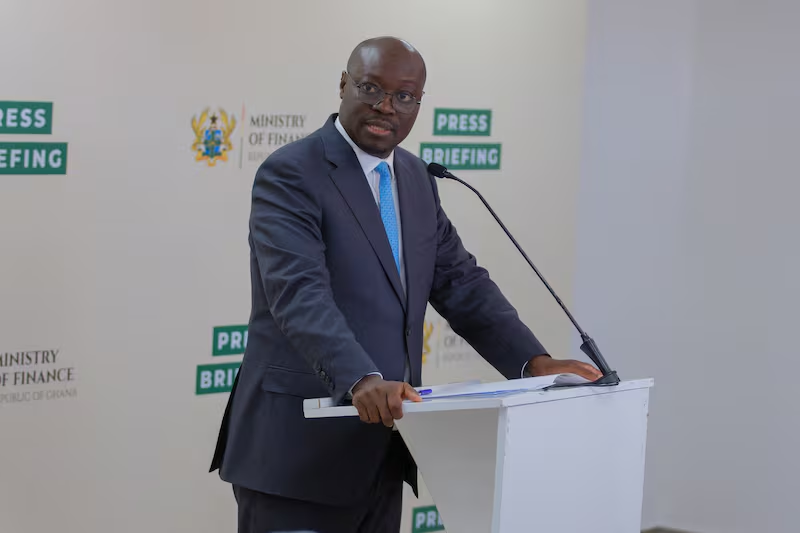
Ghana's finance minister Cassiel Ato Forson has presented a 2027 budget built around a $10bn domestic investment programme, with a target of 5.2% economic growth next year.
Forson presented the budget to parliament late on Thursday 12 November.
The New Economy programme
The government plans to spend $10bn over four years from 2027, funded domestically, to boost output, exports and jobs. Target sectors include commercial agriculture, energy infrastructure, technology, textiles and garments, and adding value to critical minerals, among others. Forson said: "Government will preserve stability, provide strategic infrastructure."
Growth, deficit and inflation
- GDP growth is projected at 5.2% in 2027, up from 4.8% in 2026.
- The cash-basis fiscal deficit is projected at 3.6% of GDP, down from 4% in 2026.
- The inflation target is 8%, plus or minus 2 percentage points.
Inflation peaked at 54.1% in December 2022 and reached a low of 3.2% in March 2026, and has edged up slightly since, according to the budget figures.
IMF and debt
Ghana has completed a $3bn IMF support programme it first sought in 2022. It now has a three-year IMF policy coordination instrument, which involves no funding but includes regular reviews.
The budget also provides for the early redemption of GH¢29bn in domestic debt exchange bonds due in February 2027, effective immediately. Ghana will repay by 31 December the second Eurobond it restructured in 2024, which is due in January 2027. Total early redemptions are expected to retire more than GH¢36bn.
What we do not yet know
- How the opposition and independent economists assess the funding for the New Economy programme. Their reaction was not available in the sources reviewed.
- The detailed allocation of the $10bn across the target sectors.