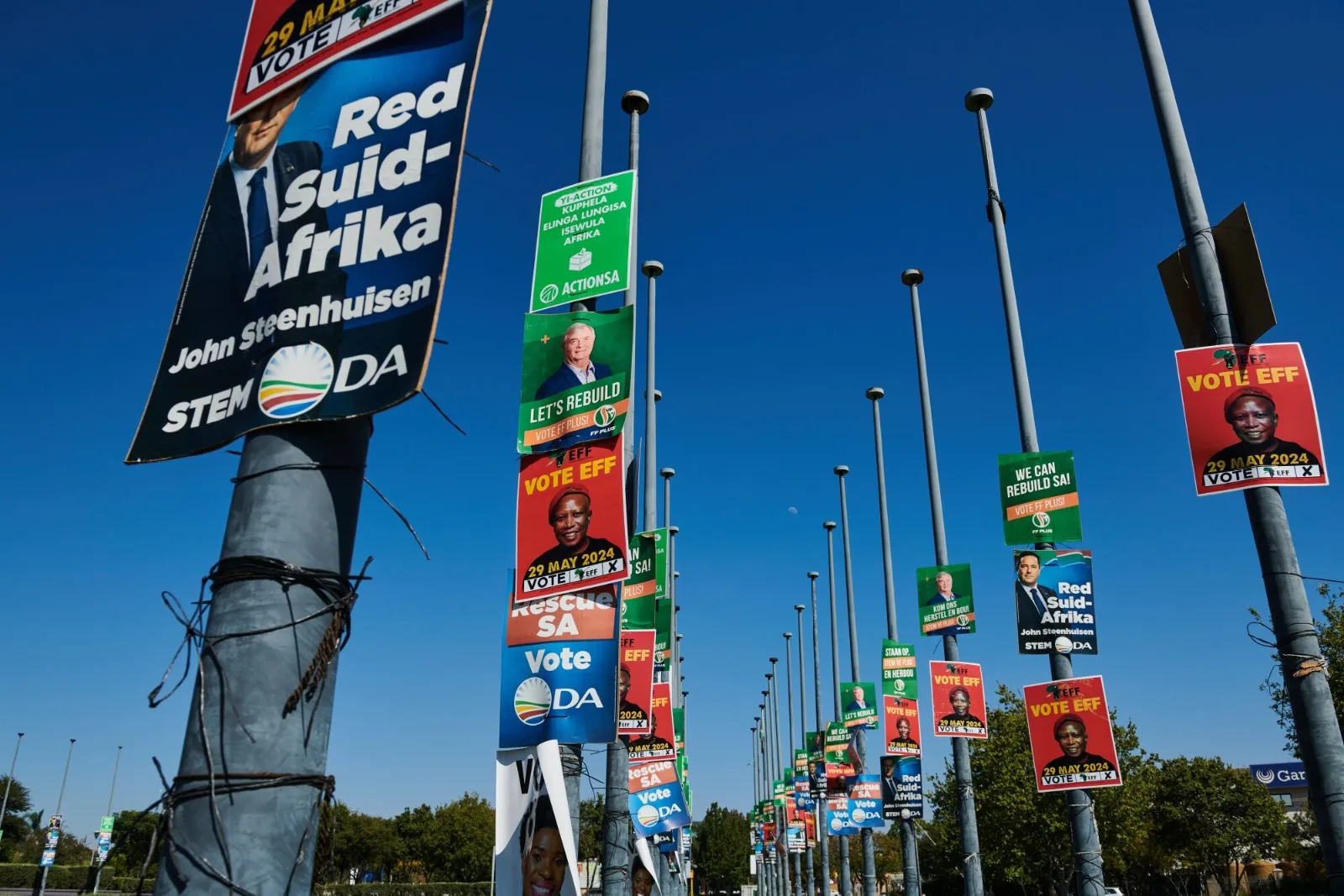
With South Africans voting in local government elections on Wednesday 4 November, analysts say investors are preparing for one of three scenarios. None is certain, and the views below come from named analysts rather than from official forecasts.
Metodi Tzanov, chief economist at Emergingmarketwatch, has set out the scenarios, according to a report carried on Monday. The analysts' central concern is not the municipal results in isolation but what they mean for the stability of the Government of National Unity (GNU).
The three scenarios
- No fear: the ANC loses support, the GNU stays intact, and the gains are spread among smaller parties.
- Best case for investors: the DA gains the upper hand, including control of Cape Town and Johannesburg.
- Worst case: the ANC loses support and aligns with the EFF and MK party. Lee Hardman of MUFG Bank said this would raise doubts about the durability of the coalition.
What the market is pricing
According to the analysts' figures, one-week implied volatility on the rand is below its one-year average, and the cost of insuring South African debt is close to a 16-year low. Adriaan du Toit of AllianceBernstein said: "South Africa's election risk looks underpriced."
Rajeev De Mello of Gama Asset Management SA said the key question for investors is "not so much the outcome of individual municipal elections".
Why it matters beyond the vote
The analysts note that the ANC won more than 50% nationally in 2016, but about 40% in the 2024 parliamentary election. Du Toit said the vote "starts the clock" ahead of the ANC's December 2027 elective conference, at which Ramaphosa is due to stand down as party leader.
What we do not yet know
- The election results. Counting begins after voting closes on 4 November and the IEC will announce results.
- Which parties would form governing coalitions in the major metros.
- How markets will react once results are declared.
This article is a summary of analysts' views and is not investment advice.