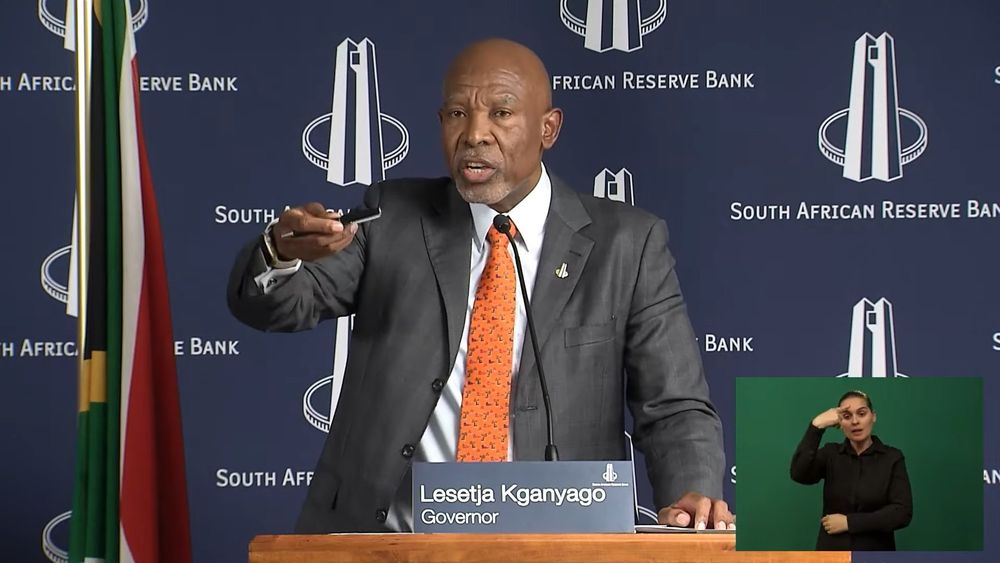
Developing story: the Monetary Policy Committee announces its decision on Thursday 19 November. This article will be updated.
Most economists expect the South African Reserve Bank (SARB) to keep the repo rate at 7.25% when its Monetary Policy Committee (MPC) announces its final decision of 2026 on Thursday 19 November. A further 25-basis-point increase has not been ruled out.
The committee raised the rate by 25 basis points in September. October's inflation figures are due on Wednesday 18 November, according to the release calendar cited in economists' previews, a day before the announcement.
The case for a hold
Neil Roets, chief executive of Debt Rescue, said: "Our expectation is that the Monetary Policy Committee will lean towards keeping interest rates unchanged." He argued that earlier increases should be given time to work.
Johann Els, chief economist at PSG Financial Services, also expects a hold. "Policy has done enough," he said. Benay Sager of DebtBusters expects no change now but said: "We do foresee a change in January." He did not say whether that change would be up or down.
Annabel Bishop, chief economist at Investec, said a rate increase is unlikely without evidence of second-round price pressures, where higher fuel and transport costs spread into the wider economy.
Waldo Krugell of the North-West University Business School is sticking with a hold for now, but warned: "the rand may turn things on their head." His colleague Raymond Parsons sees two options, a hike or a pause, and said the decision remains a "judgement call" for the committee.
The case for another rise
Economists at Nedbank, in their weekly economic monitor, see the committee's options as a hike or a hold and favour another 25-basis-point increase, although they say the timing is hard to pin down. They forecast October inflation at 5.6% and headline inflation above 5% in the fourth quarter of 2026 and the first quarter of 2027, driven mainly by transport costs. They also flag possible food price pressure linked to El Niño.
Nedbank also sets out a counter-argument: the energy shock could fade, and weaker demand could limit how far businesses can pass on higher transport costs.
Where inflation and growth stand
- Annual consumer inflation was 4.5% in September, up from 4.4% in August, according to Stats SA figures cited in the previews.
- Over the year to September, fuel prices rose 27.9% and transport costs 10.8%. Housing and utilities rose 5.2%, and insurance and financial services 5.4%, according to the same figures.
- In September the SARB raised its near-term inflation forecasts, mainly because of fuel prices, and warned that inflation could exceed 5% later in 2026 and early in 2027 before easing.
- The economy contracted by 0.2% in the second quarter of 2026, and the SARB cut its 2026 growth forecast to 1.2% from 1.4%.
The SARB's September projections suggested the repo rate could stay broadly stable for the rest of 2026, with possible cuts later as inflation moves towards its 3% target. The bank stressed that this is not a commitment and that it decides meeting by meeting.
What it means for households
Analysts say a higher rate would add to the cost of home loans and other debt and could raise financing costs for businesses, especially smaller ones. They add that holding the rate risks entrenching inflation if higher transport costs spread to other prices.
What we do not yet know
- The committee's decision, due on Thursday.
- October inflation, which will shape the debate. Nedbank forecasts 5.6%; other forecasts may differ.
- How the rand moves between now and the announcement, which Krugell flagged as a risk.