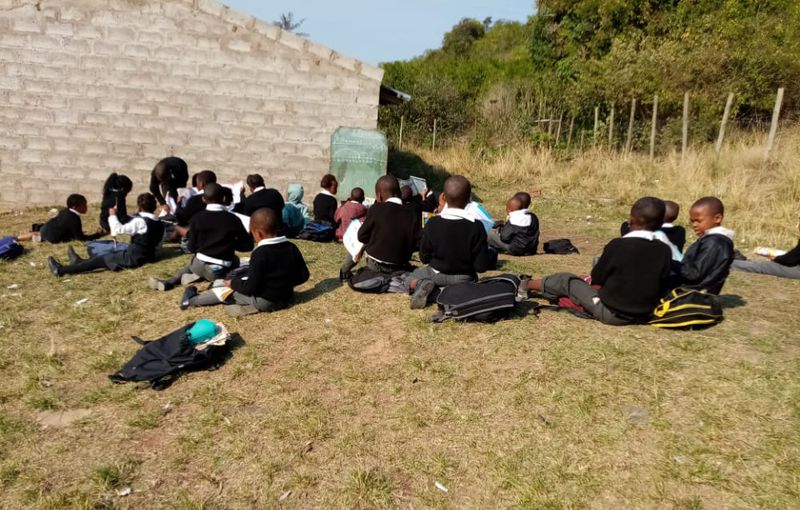
At Tantyi Primary in Makhanda, parts of the school building are cordoned off after the roof partly collapsed. According to an affidavit by the school governing body's treasurer, about 80% of parents at the no-fee school are unemployed. The school owes the municipality more than R57,000, against a municipal allocation of R47,600 for the year.
The governing body says R127,000 that should have reached the school this year was held back by the Eastern Cape Department of Education. Now Tantyi and 10 other school governing bodies are going back to court to get that kind of money released.
What the schools are asking for
The 11 governing bodies, together with the Makhanda Circle of Unity, filed an application in the Makhanda High Court on 3 November. They are challenging the department's decision to withhold 40% of every public school's 2026/27 allocation, which the department's own figures put at R1.1 billion. The case is set down for 3 December, and the applicants want the money paid to schools by 31 March 2027.
The money in question pays for the basics that keep a school running: learning materials, electricity, water and maintenance. For learners at no-fee schools in quintiles 1 to 3, the 40% cut takes the per-learner allocation from R1,835 to R1,101 for the year, according to figures in court papers.
Fee-charging schools are feeling it too. At Hoërskool PJ Olivier, also in Makhanda, the governing body secretary says 70% of learners do not pay fees. The school has leaking roofs, a hostel boiler it cannot afford and municipal arrears of more than R1 million.
Cecile van Schalkwyk, a senior attorney at the Legal Resources Centre who represents the applicants, said the department's central projects might be worthwhile, but "the difficulty is that they are being funded using an allocation that is not meant for these projects."
Not the first time
This is the second round. In August, the department conceded in the same court that it had unlawfully withheld money from schools since 2020, and on 19 August the court declared earlier cuts unconstitutional, unlawful and invalid. That order did not require the department to repay past shortfalls, and it left open whether it applied to this financial year.
According to figures set out by the applicants, the amounts held back from schools add up to nearly R3.8 billion over four years.
What the department says
In a written response on 24 November, the department would not say whether it will oppose the application, saying its position "will be communicated through its formal court submissions." It said buying centrally, for items such as furniture, technology and municipal accounts, is meant to improve access for rural schools in particular. It also conceded that central provisioning "does not, by itself, establish compliance with the order," and said it would comply if the court orders repayment. According to the Legal Resources Centre, National Treasury has given notice that it will oppose the application.
Why it matters beyond the Eastern Cape
School allocations are what turn the lights on and keep the taps running in thousands of classrooms. When they are cut, the gap often lands on parents who are already stretched, or simply goes unfilled. Other provinces face similar budget pressure, and how this case ends could shape how far provincial departments can go in redirecting money meant for schools.
What we do not yet know
- Whether the department will file opposing papers before the 3 December hearing.
- What the department's first report under the August order, due on 30 November, will say about full funding for 2027/28.
- Whether any of the withheld money can reach schools before the new school year starts in January.