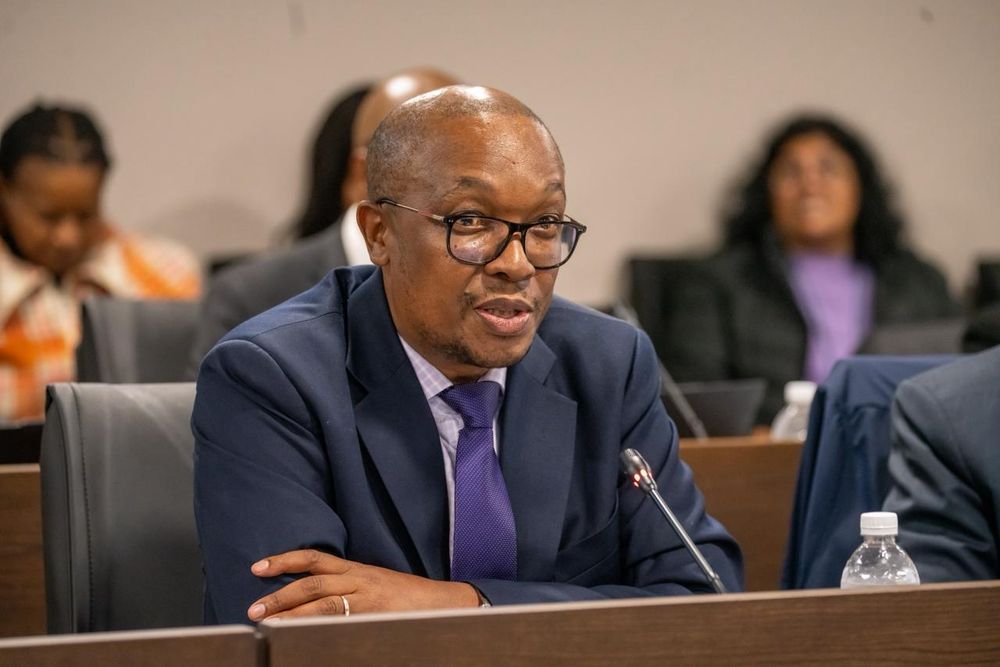
Trade, Industry and Competition Minister Parks Tau has rejected calls to scrap broad-based black economic empowerment (B-BBEE), saying South Africa will reform the policy but will not trade it away for relief from United States tariffs.
Tau made the remarks at the Broad-based BEE Practice and Policy Conference. He said the policy is under pressure from abroad, where he said it is "being recast as discrimination", and at home, where he said it is "being challenged in our courts".
What Tau said
Tau said the government will not abandon transformation. According to reports of his speech, he said: "We will not abandon transformation. We will not trade it for tariff relief."
He said the review of B-BBEE ordered by President Cyril Ramaphosa will not lead to the policy being scrapped. Tau said the aim is to move "from compliance to outcomes" and "from transactions to industrialisation", and that reform will be based on evidence.
Where the policy has fallen short
Tau acknowledged shortfalls. He said average ownership scores rose from 12.4 points in 2013 to 21.6 in 2023, but that progress has slowed significantly since 2018.
He said the B-BBEE Commission could not draw firm conclusions on whether the policy has reduced unemployment, inequality or poverty. Enterprise and supplier development spending of about R20 billion a year has too often "bought points instead" of helping marginalised groups, Tau said.
Tau pointed to unemployment of 33.7%, and said more than 3.7 million young people aged 15 to 24 are not in employment, education or training. He said Africans make up 81.3% of the economically active population but hold 21.1% of top management positions.
Pressure from Washington and from the DA
Tau linked the external pressure to a United States executive order issued in February 2025 that cited South Africa's empowerment requirements, and to a list of demands set out by Washington in March 2026. According to Tau, those demands include ending the mandatory surrender of ownership or control as a cost of doing business.
At home, Tau said employment equity targets have been challenged in the High Court, the Supreme Court of Appeal and the Constitutional Court, and that each attempt to stop them has failed. Six constitutional challenges remain. The DA, the second-biggest party in the government of national unity, has moved to draft a bill to repeal B-BBEE, arguing that it benefits politically connected people.
A study by British International Investment and Swedfund, published in October 2026, found that black-owned businesses in South Africa are concentrated in small enterprises and often fail to grow, with a funding gap of $45 billion, according to the study's authors.
What happens next
The dtic is refining its instruments in two phases. Draft amendments to the Codes of Good Practice were gazetted in January. Draft amended B-BBEE Regulations were published on 13 November for a 30-day public comment period. Parliament would then consider amendments to the B-BBEE Act itself, and no final dates have been given.
The minister's spokesperson said the review aims to strengthen enforcement and monitoring rather than compliance alone, and that ownership deals have benefited at least 873,000 black South Africans.