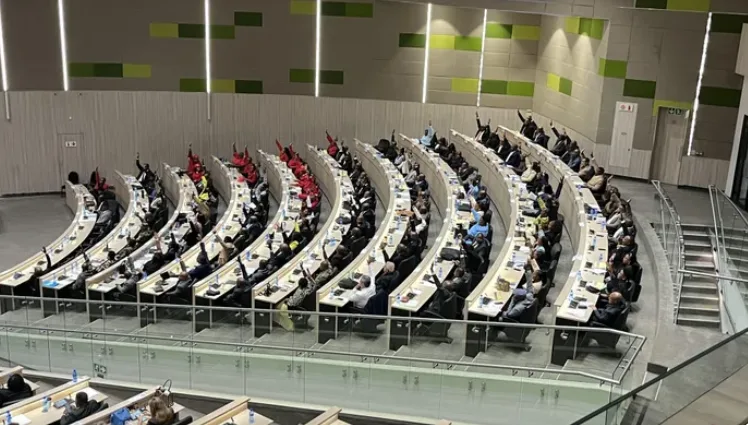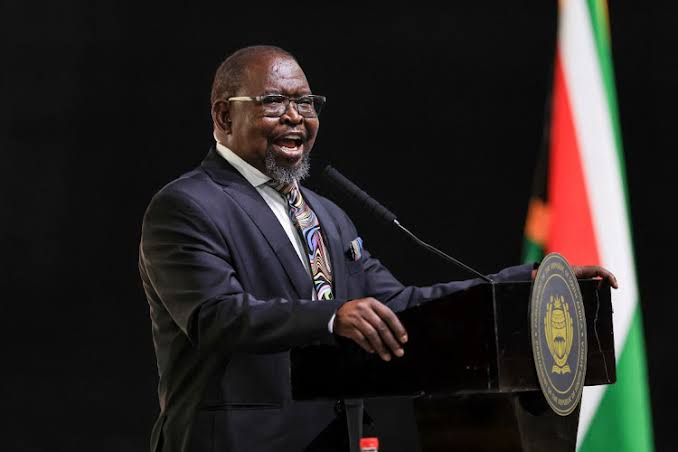
Finance Minister Enoch Godongwana will table the 2026 Medium Term Budget Policy Statement in Parliament on Wednesday, 21 October, the government has announced.
A preview by Investec chief economist Annabel Bishop says spending pressures are building: the deficit is running well ahead of the pace set in the February budget, and markets will be watching for a fiscal anchor that Treasury has promised.
What the deficit and revenue figures show
Bishop says the preliminary deficit stands at R189 billion, against a budgeted pace of about R125 billion for the period. The full-year main budget deficit is R301 billion.
Revenue is 39% of the full-year budget, up from 37% a year earlier, helped by higher precious metals prices, she says. Year-to-date revenue of R812 billion is still below the R868 billion that the R2.082 trillion annual target implies at this point.
Spending is 42% of budget, up from 41% last year, and is running ahead of pace at R1.001 trillion against about R993 billion expected, according to Bishop.
She warns that government may spend any revenue gain, as it did last year, when the mini-budget added R15.8 billion in spending and raised the contingency reserve to R13.5 billion. "The fiscal trajectory has been one of slippage," she says.
Debt, tax and the fiscal anchor
The 2026/27 deficit is budgeted at 4.0% of GDP. Bishop's forecast matches that, but she says it could reach about 4.1% if spending keeps running ahead.
Debt is projected at 77.3% of GDP this year, 77.0% next year and 76.5% the year after. Bishop says a rise above 77.3% would push up bond yields and that markets would react badly to large deviations.
No tax changes are expected, she says, because increases are unlikely to be acceptable to the Government of National Unity or the public. On fuel, Godongwana said in September that any further relief would have to be funded elsewhere; Treasury cut fuel levies by R3.00 a litre in April at a cost of more than R17 billion.
The proposed fiscal anchor, a rule meant to bring down debt and deficits, is the item analysts are waiting for, Bishop says.
What we do not yet know
- Treasury's own revised deficit, debt and revenue figures, which will only be published on 21 October.
- The design of the fiscal anchor and whether it carries binding limits.
- Whether any extra fuel relief or new spending will be announced.
- Whether other economists agree with the figures above; this preview is the only source we have used so far.