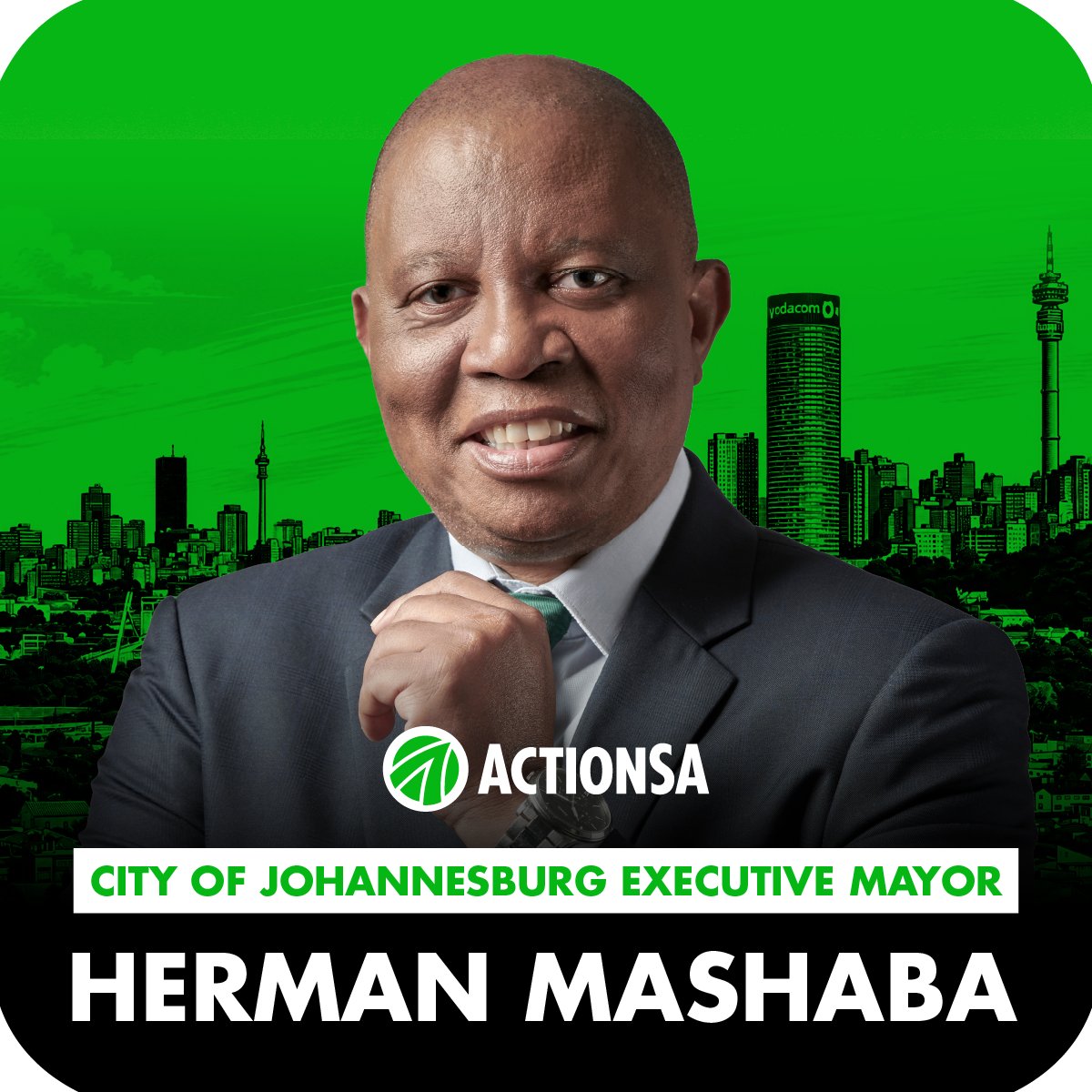
ActionSA leader Herman Mashaba was elected executive mayor of Johannesburg on Friday. He beat the DA's Helen Zille by 170 votes to 97 at a council sitting where 267 valid votes were cast.
The vote returns Mashaba to the office he held from 2016 to 2019, when he was mayor for the DA before leaving the party. It also means the bloc of the ANC, ActionSA and the EFF that elected him now leads all three Gauteng metros. ActionSA's Nasiphi Moya was re-elected in Tshwane on Thursday, and the ANC's Mziyanda Mketsu was elected in Ekurhuleni earlier on Friday.
Earlier in the sitting, the ANC's Adolph Marema was elected speaker with 171 votes to the DA's Alex Christians' 99. Marema is the ward councillor for Ward 116, which covers parts of Alexandra, Marlboro Gardens and Far East Bank.
How the vote fell
No party won a majority in Johannesburg in the 4 November local government elections. The DA won the largest share, about 35%, and holds 91 of the council's 270 seats, making it the official opposition. The ANC holds 64 seats, ActionSA about 42, the EFF 17 and the MK Party 15.
Shortly after the vote, Mashaba posted on X: "I have been just elected as the Executive Mayor of Joburg! Now, it's time to roll up our sleeves and hit the ground running. The hard work of delivering for the residents of Johannesburg begins immediately!"
ANC secretary-general Fikile Mbalula said the party had engaged with every party willing to meet it during negotiations, and described the DA as "a party of last resort". The ANC's national executive committee ruled out a coalition with the DA in Johannesburg earlier this month.
What each side put on the table
In the weeks before the vote, ActionSA said it would not negotiate with the DA unless the DA dropped Zille as its Johannesburg candidate and Cilliers Brink as its Tshwane candidate. The DA rejected the demand and called it unreasonable.
The DA then proposed a confidence-and-supply arrangement. Under it, the DA would have governed Johannesburg and Ekurhuleni and ActionSA would have governed Tshwane, with the parties agreeing to pass budgets and block motions of no confidence without sitting in each other's executives. ActionSA rejected the proposal.
In mid-November, DA leader Geordin Hill-Lewis said the demand that Zille step aside was "extraordinarily difficult for us to swallow", and argued that a plurality of Johannesburg voters had chosen her. At the time of writing, the DA had not issued a formal response to Friday's result.
What it means for residents
Johannesburg's council controls a budget of close to R100 billion. Its utilities, including Johannesburg Water and City Power, report to the city. That makes the incoming mayor and mayoral committee answerable for water supply, electricity, billing and roads.
The city has had seven mayors since the 2021 local elections as successive coalitions collapsed. That instability has slowed decisions on budgets and infrastructure repairs. Residents who want to know who answers for a service failure in their area will need the names of the new mayoral committee members, which had not been announced on Friday.
The new administration's first test will be the city's adjustments budget and its plans for water and electricity infrastructure ahead of the peak summer demand months.
What we do not yet know
- Who will be deputy mayor, and who will sit on the mayoral committee.
- What role, if any, the MK Party will play in the Johannesburg executive. Reports on its place in the bloc differ.
- Whether the coalition partners will publish the agreement that underpins the new government.