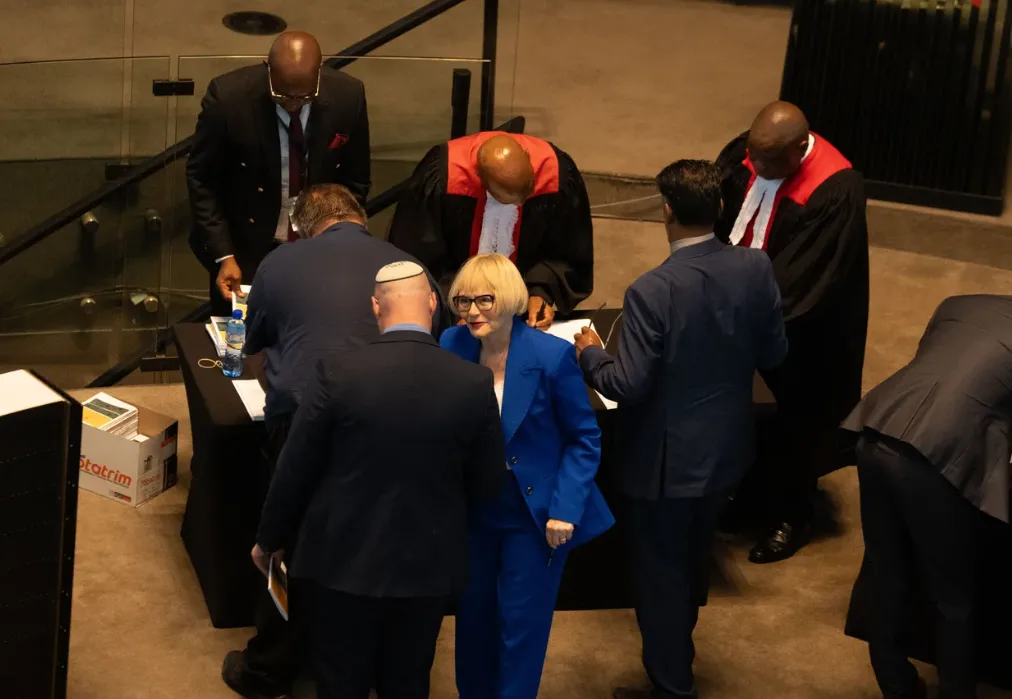
The City of Johannesburg's newly elected council has begun its new term, with Democratic Alliance federal chairperson Helen Zille at the centre of the political contest over who will govern South Africa's largest metropolitan municipality.
The city's inaugural council meeting was scheduled for Monday, 23 November 2026, at the Constance Connie Bapela Council Chamber in Braamfontein.
According to the official council agenda, all elected councillors were scheduled to be sworn into office before the election of the speaker, executive mayor and deputy mayor.
The meeting comes amid intense coalition negotiations involving the ANC, ActionSA, the Economic Freedom Fighters and the uMkhonto weSizwe Party.
Zille has maintained that the DA has not abandoned its ambition to govern Johannesburg, despite uncertainty surrounding the coalition arrangements.
New councillors begin their five-year term
The City of Johannesburg has 270 council seats, with newly elected representatives preparing to take responsibility for municipal governance over the next five years.
The inaugural meeting is an important constitutional and administrative step in establishing the new council.
The official agenda includes the tabling of the Independent Electoral Commission's councillor list, the swearing-in of elected representatives and the subsequent election of council leadership.
These proceedings will determine the political structure responsible for municipal services, infrastructure, financial oversight and local development.
Zille refuses to abandon the DA's Johannesburg ambitions
Speaking to eNCA ahead of the inaugural meeting, Zille said the DA was not giving up its attempt to govern Johannesburg.
She indicated that the party was prepared to serve in opposition if its coalition proposals were rejected.
Zille also said coalition negotiations were not complete because political parties still needed to obtain formal approval from their respective leadership structures.
Her comments underline the uncertainty surrounding the final political arrangements in Johannesburg.
Coalition negotiations remain central
The ANC, ActionSA, EFF and MK Party have been involved in negotiations over the distribution of political leadership in Gauteng's metropolitan municipalities.
ActionSA leader Herman Mashaba has emerged as a prominent contender for the Johannesburg mayoralty under the proposed arrangements.
However, the final leadership structure depends on formal agreements and the council's voting processes.
The outcome will have significant implications for the DA, which is seeking to retain political influence in a municipality that has experienced repeated coalition changes.
What happens next?
The election of the executive mayor, deputy mayor and speaker will determine the immediate leadership of the municipality.
Residents will be watching closely to see whether the new administration can establish political stability and address persistent problems involving water supply, electricity infrastructure, financial management and municipal services.