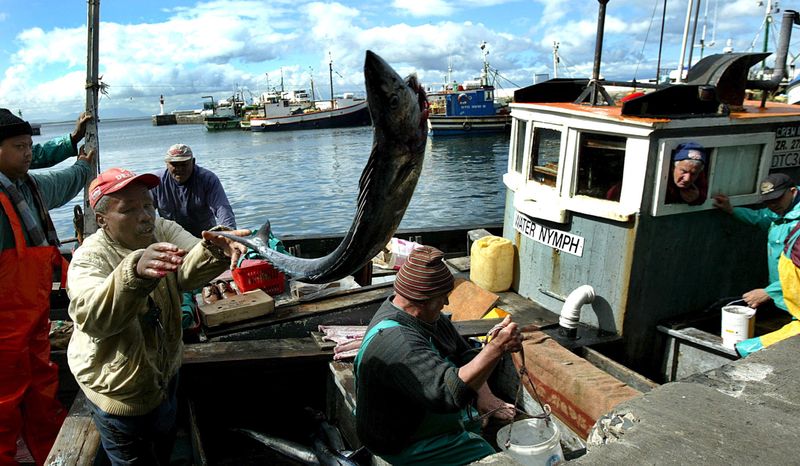
Faez Poggenpoel speaks for 790 fishers in 12 communities. On Thursday, 26 November, he had the President's ear, and he used it to describe how far small-scale fishers have come. "We own, we harvest, we process, and we export our own products," he said.
Poggenpoel, chairperson of the Only Fishers Secondary Cooperative in the Western Cape, was one of several business owners who spoke at the Presidential MSME and Cooperatives Breakfast, held before the fourth Presidential MSME and Cooperatives Awards, according to a government account of the event. Their message to President Cyril Ramaphosa was consistent: the support exists, but it is scattered, overlapping and hard to reach.
What they asked for
Poggenpoel credited the Small-Scale Fisheries Policy of 2012 with giving communities a real stake in the value chain. He said the cooperative is ready to grow but needs help through its incubation stage, and proposed a national support plan led by the Department of Small Business Development and the Small Enterprise Development and Finance Agency (SEDFA), funded by National Treasury.
Natasha Mostert has run Harties Boat Company at Hartbeespoort Dam in the North West since 2006, with seven licensed vessels. She is planning a steam train project that she said could create 110 permanent and 250 indirect jobs. She raised the overlap between the National Empowerment Fund and SEDFA. "Can government clarify which businesses and funding needs each institution should prioritise," she asked.
Clarissa Carsten built Springbok Guest Farm in Namaqualand in the Northern Cape into a four-star hospitality and conferencing business over 12 years, without outside development funding. She called for newly registered companies to be referred from the Companies and Intellectual Property Commission straight to SEDFA, and for government to report each year on how many registered businesses actually receive support.
Bongani Sibuyi, who founded the ICT company Relevant Technologies in Mbombela in 2018, proposed one central system where government funders share information on the businesses they support, so gaps can be spotted and duplication avoided.
Tekane Ledimo, co-founder and CEO of Nisa Finance, a digital lender started in 2017 by three University of Cape Town students, said the company has deployed more than R60 million to small businesses so far this year, collected over 95% of it, sustained more than 800 jobs and created 400 new ones. He urged government to help small firms get into renewable energy, digital, AI, agro-processing and green economy work, and to make sure they benefit from big infrastructure projects.
Why this matters
For the owner of a spaza, a salon or a fishing boat, the problem is often not that help does not exist, but knowing which office to go to and filling in the same forms twice. The proposals from Thursday's breakfast, from a single referral route for new companies to a shared database of who has already been helped, are practical asks that would make it easier for ordinary entrepreneurs to find their way.
On the same day, Small Business Development Minister Stella Ndabeni said government was mobilising billions of rand to support small businesses, and the President said small businesses are critical to driving job creation.
What we do not yet know
- Whether government will adopt any of the specific proposals, such as the CIPC-to-SEDFA referral route or a shared funder database.
- Whether the National Empowerment Fund will move to the Department of Small Business Development, as Mostert asked.